Deals
VEVOR Fuel Container, 19 L, Gas Tank with Spout & Clear Scale, 15 L/min Max Flow Rate, Secure & Leak-proof, Portable Flat Fluid Container for Most Cars Motorcycle SUV ATV UTV, Yellow, 1 Pack

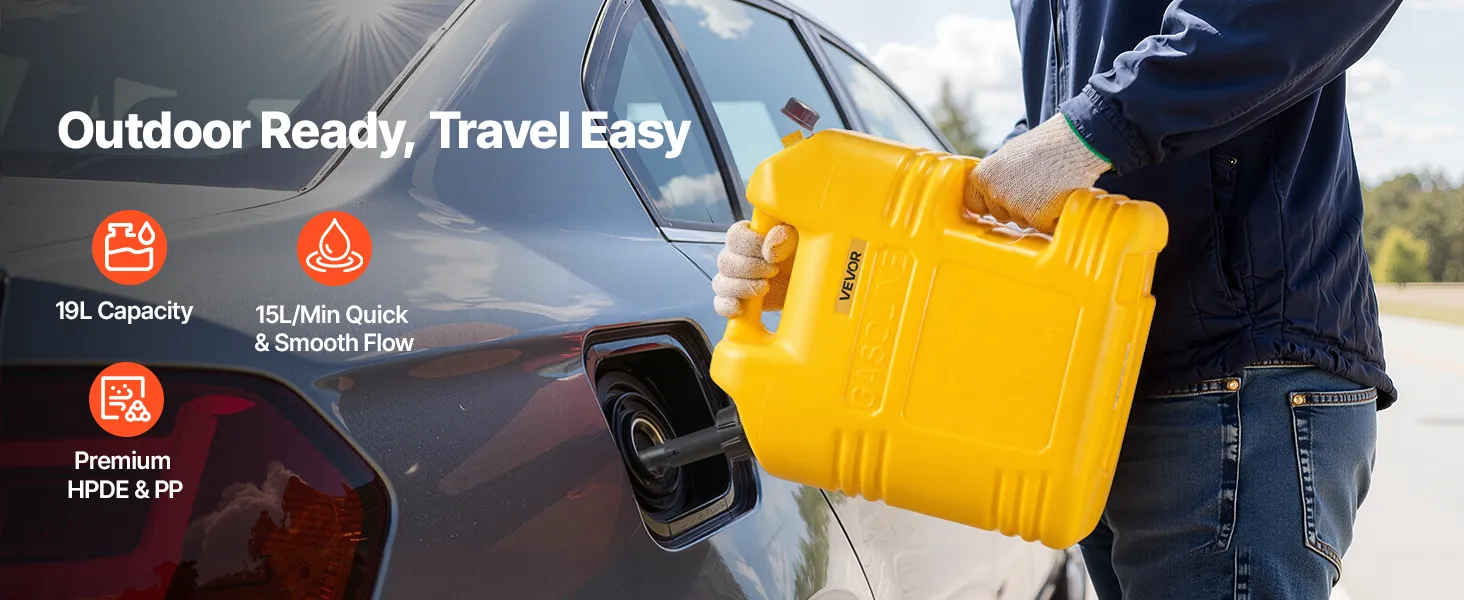
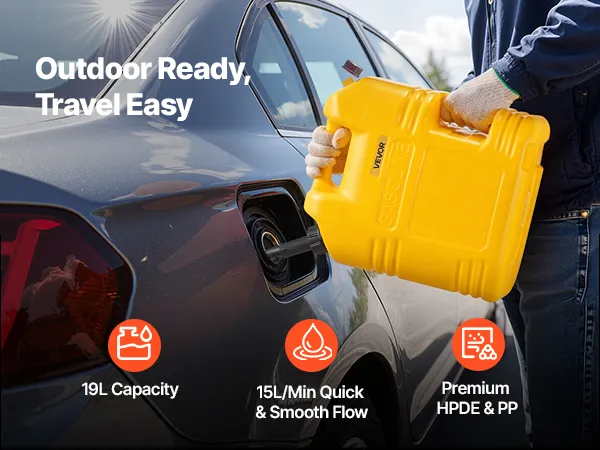
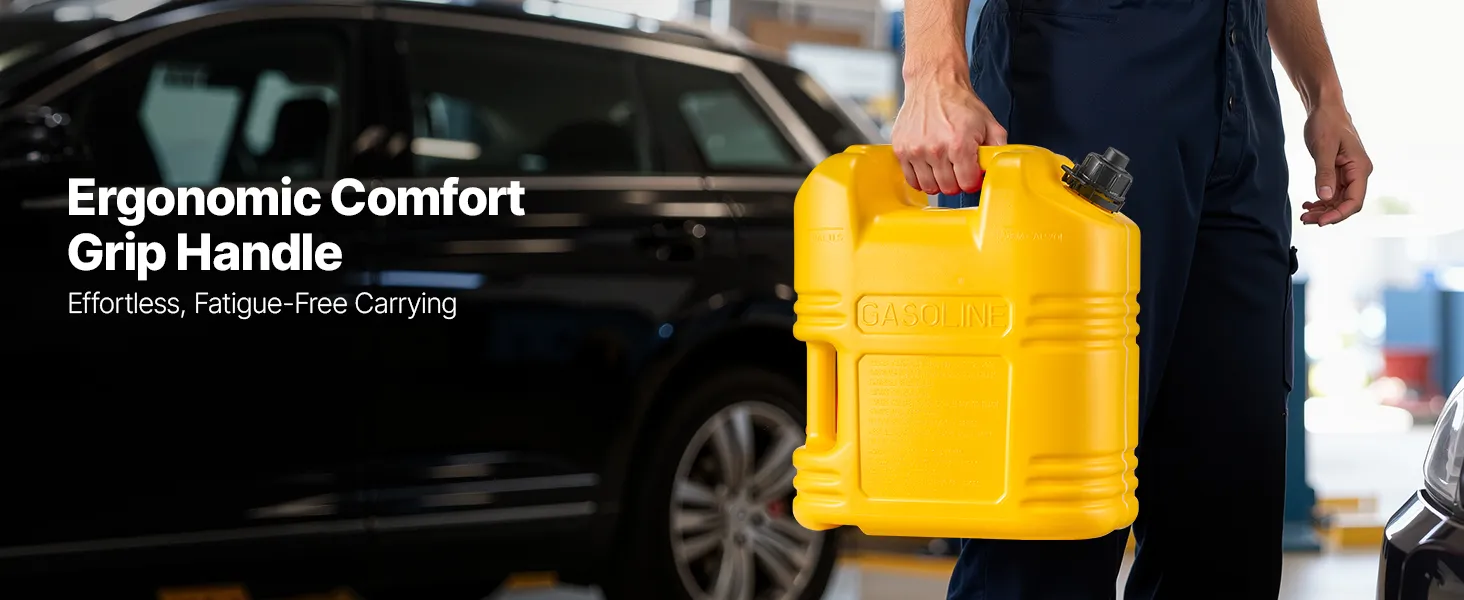
- Compact Size: Need backup fuel without losing space? This 19L gas can (13.4 x 9.1 x 15.2 inches) fits right in your trunk. It's lightweight yet reliable for trips, camping, or outdoor work
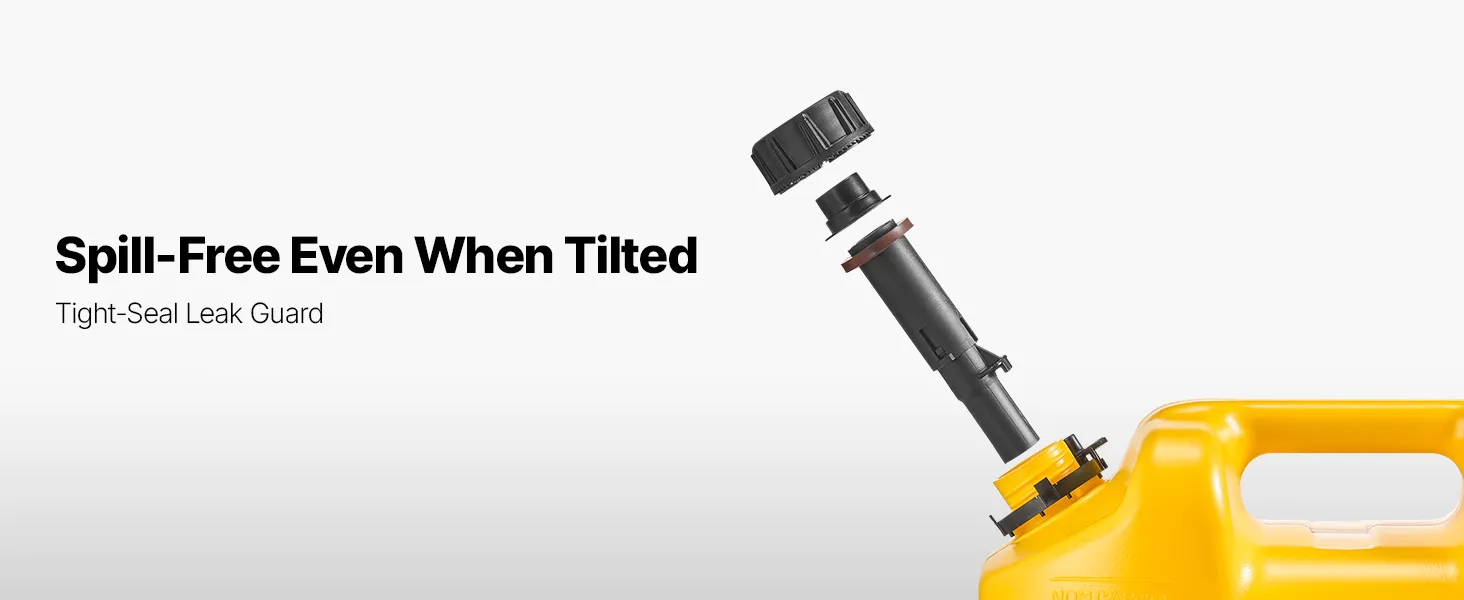
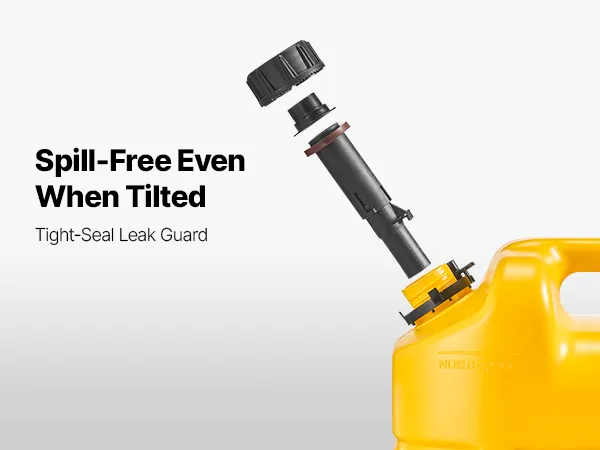
- Secure Anti-Loosening: Hate messy leaks? This fuel container comes with a sealing ring that locks tight, even on rough rides, keeping fuel where it belongs without waste
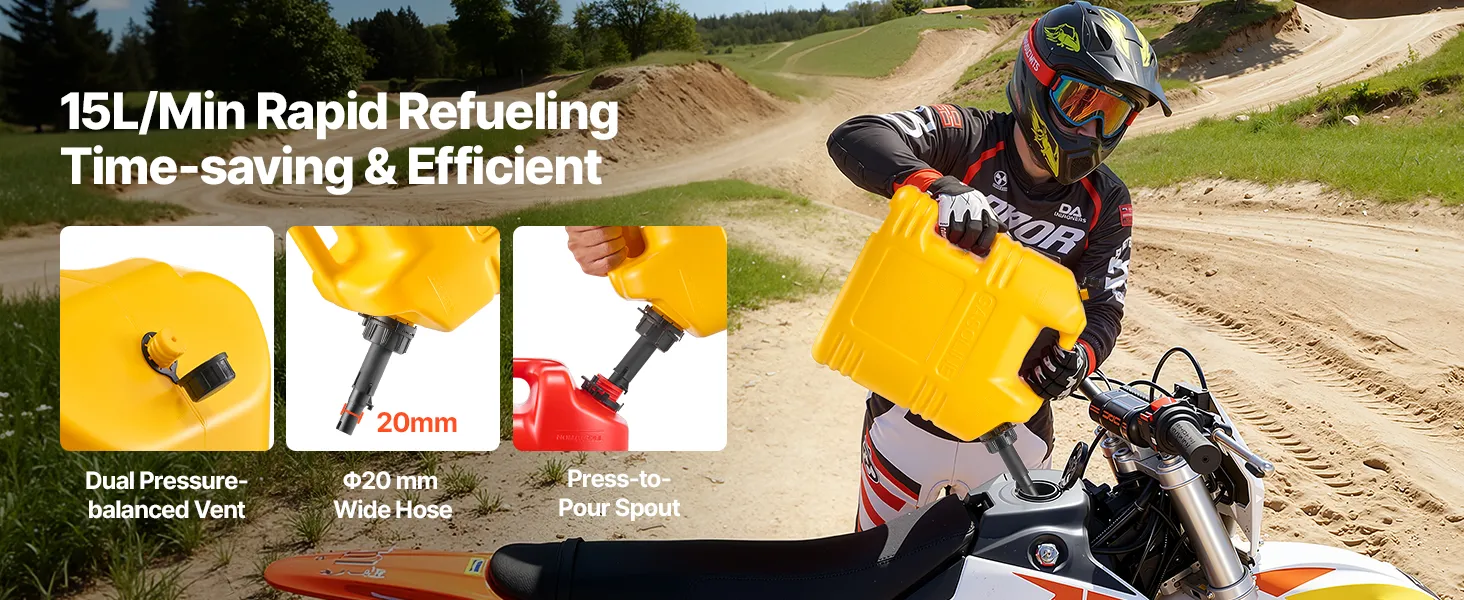
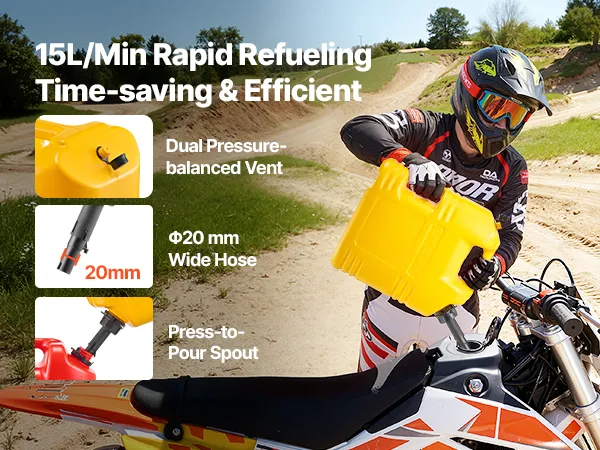
- Smooth 15 L/min Fast Flow: Done with "glug-glug" refills? This fuel can pours up to 15 L/min with a 20 mm hose and dual vent valve for a steady, smooth flow every time
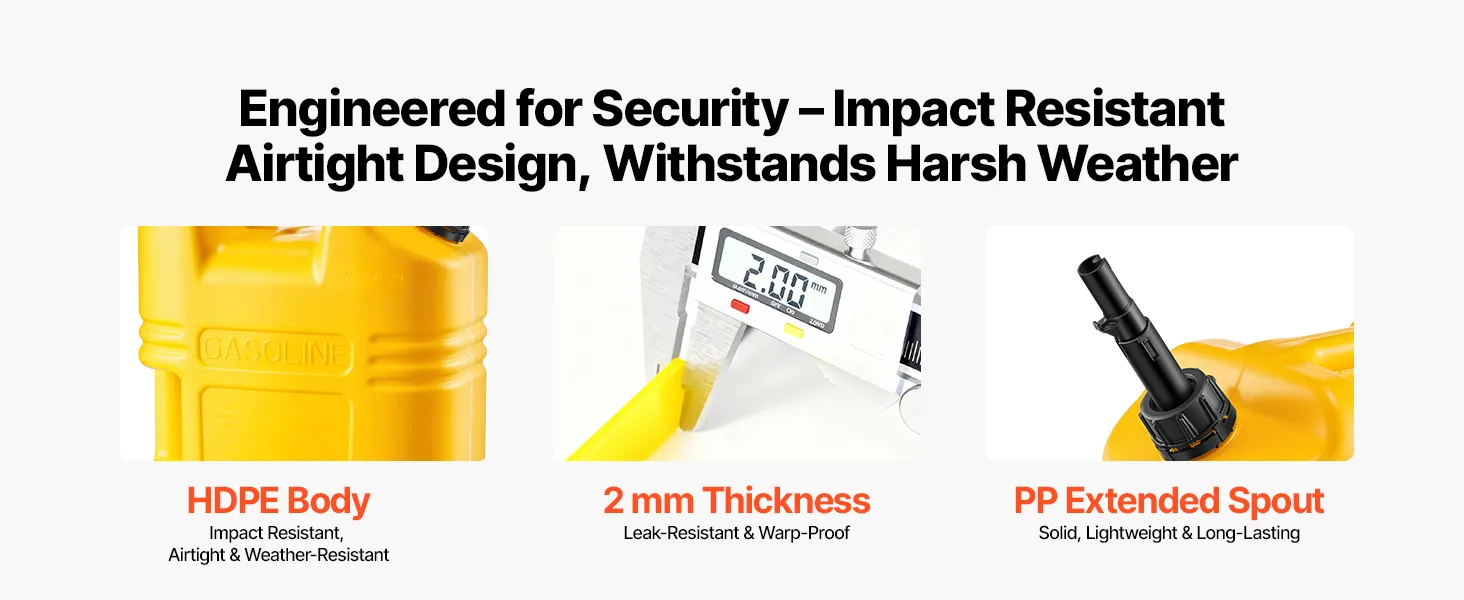
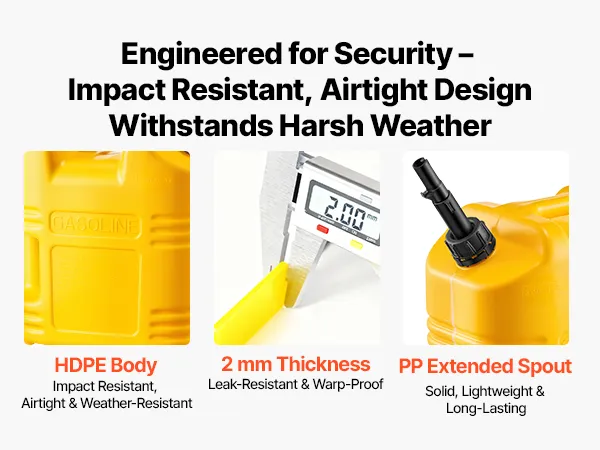
- Long-lasting Design: Want durability? This HDPE fuel tank has 2 mm walls that withstand drops, bumps, and sun. The PP extension spout makes every refill easy and clean
- Durable & Accurate Measurement: Need precise readings? The raised markings show real capacity, helping you avoid spills, waste, or underfilling with quick, accurate checks
Frequently Bought Together
Reviews
About this item

Will this tank leak or have its cap pop off on rough roads?
A: It has a secure locking cap and tight seal, so even on bumpy rides it stays sealed and leak-free.
Q: What's the material? Will it crack or warp in heat?
A: Made of thick HDPE (~2 mm walls), impact-resistant and heat-stable to avoid warping.
Q: Does it gurgle or clog when pouring?
A: It has a vent valve plus wide pouring tube—flow is smooth and almost silent.
VEVOR 5 Gallon Fuel Container Holds 19L in a 13.4 x 9.1 x 15.2 in Flat Body
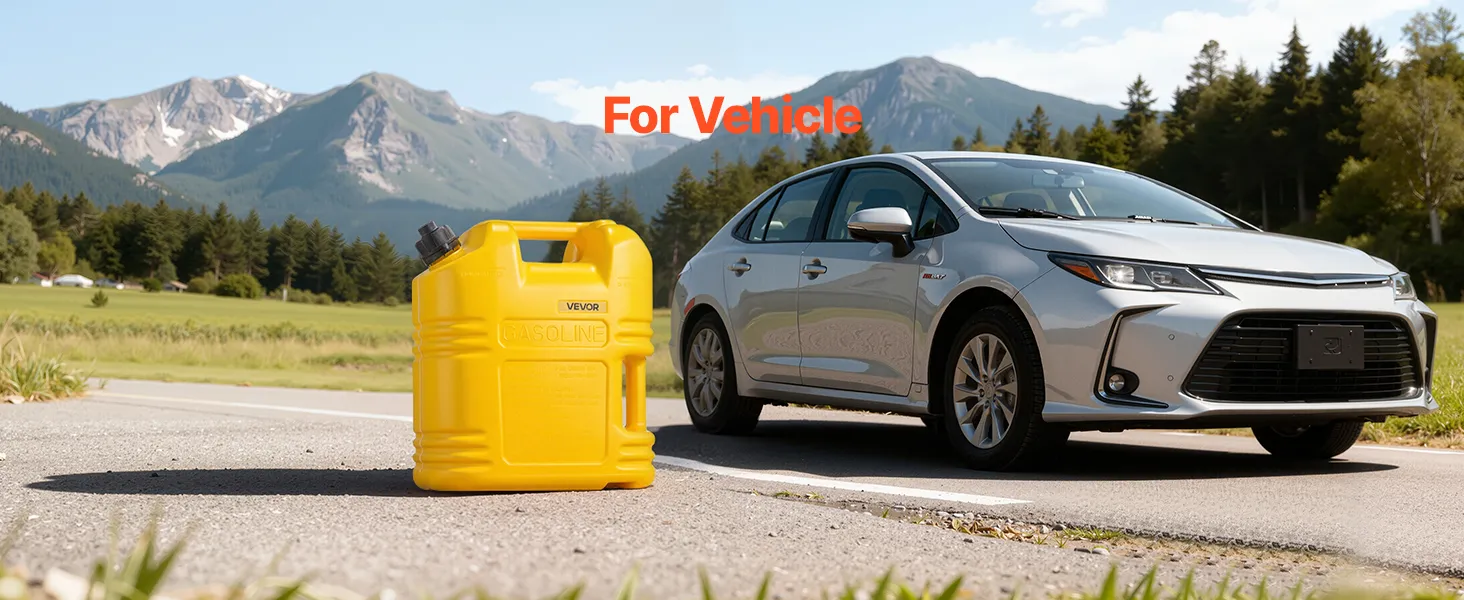
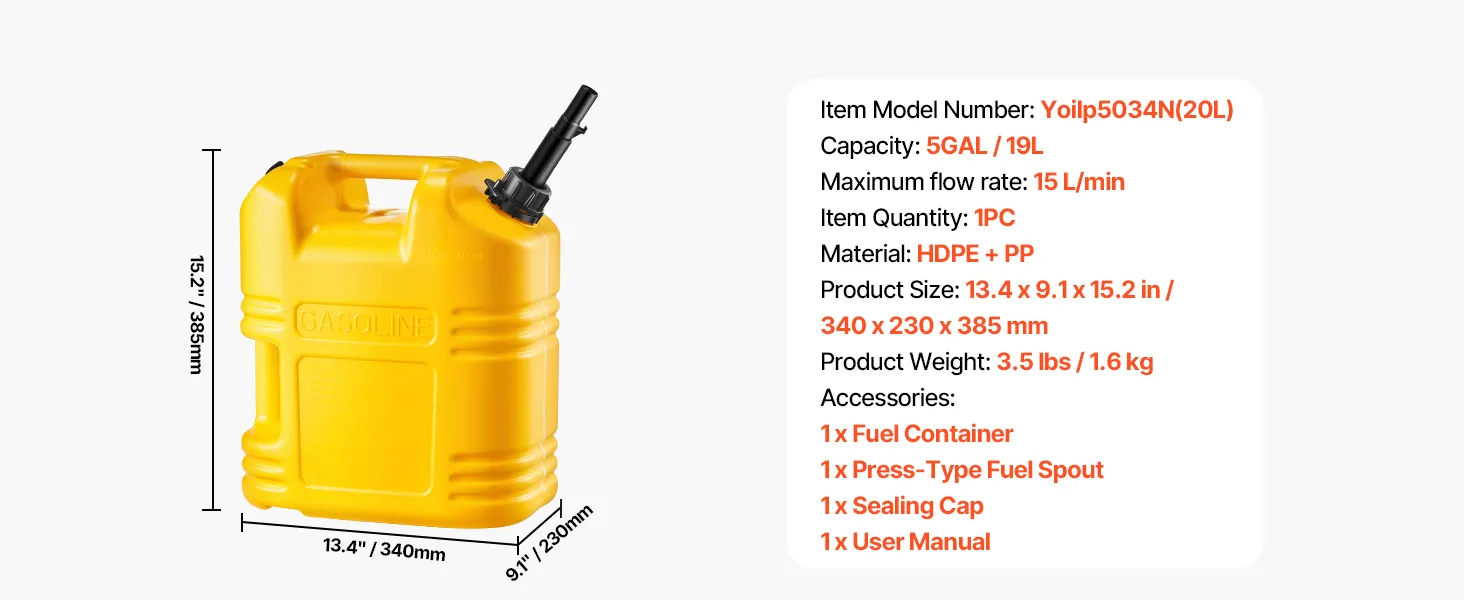
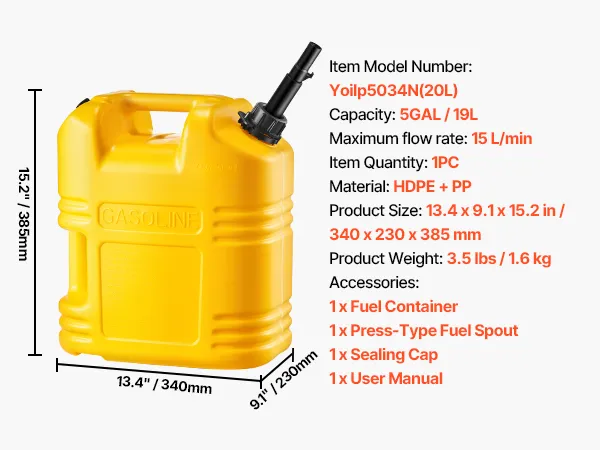
The VEVOR 5 gallon fuel container has a flat body that is 13.4 x 9.1 x 15.2 inches and holds 19 liters. This shape is designed to fit into passenger car trunks, SUV cargo floors, ATV rear platforms, and UTV bed organizers without moving other important gear. The flat 9.1-inch depth profile is the most important size advantage.
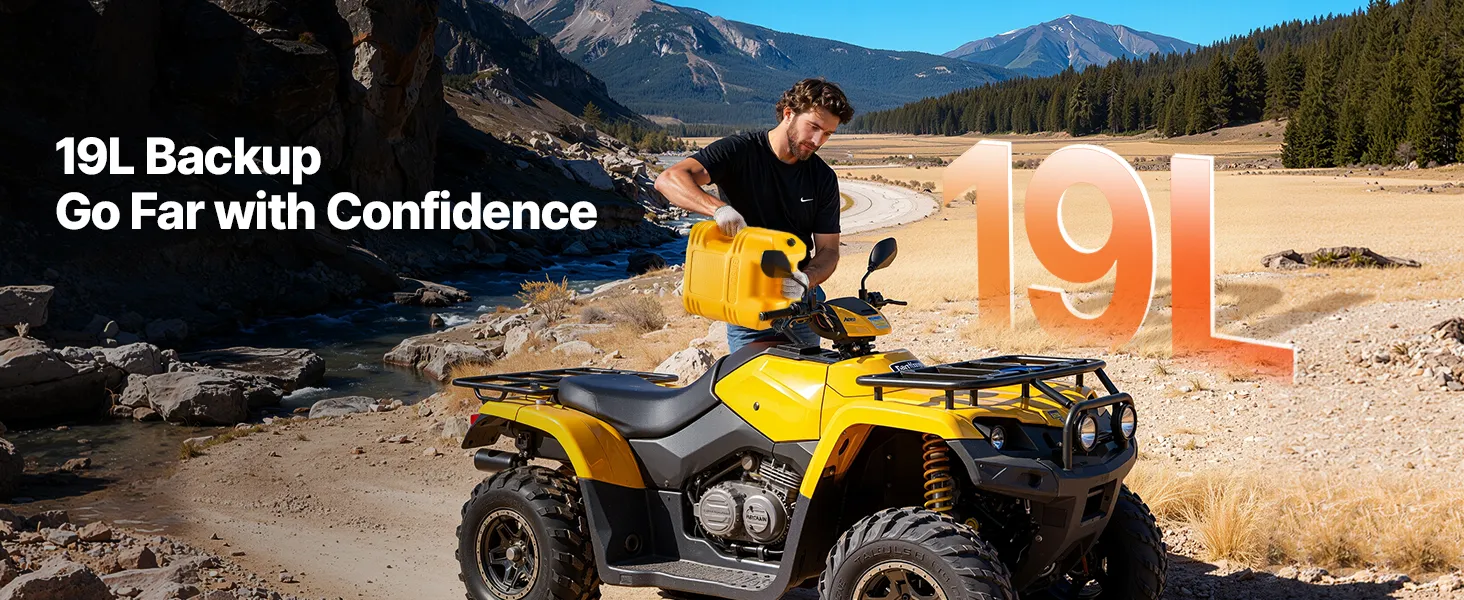
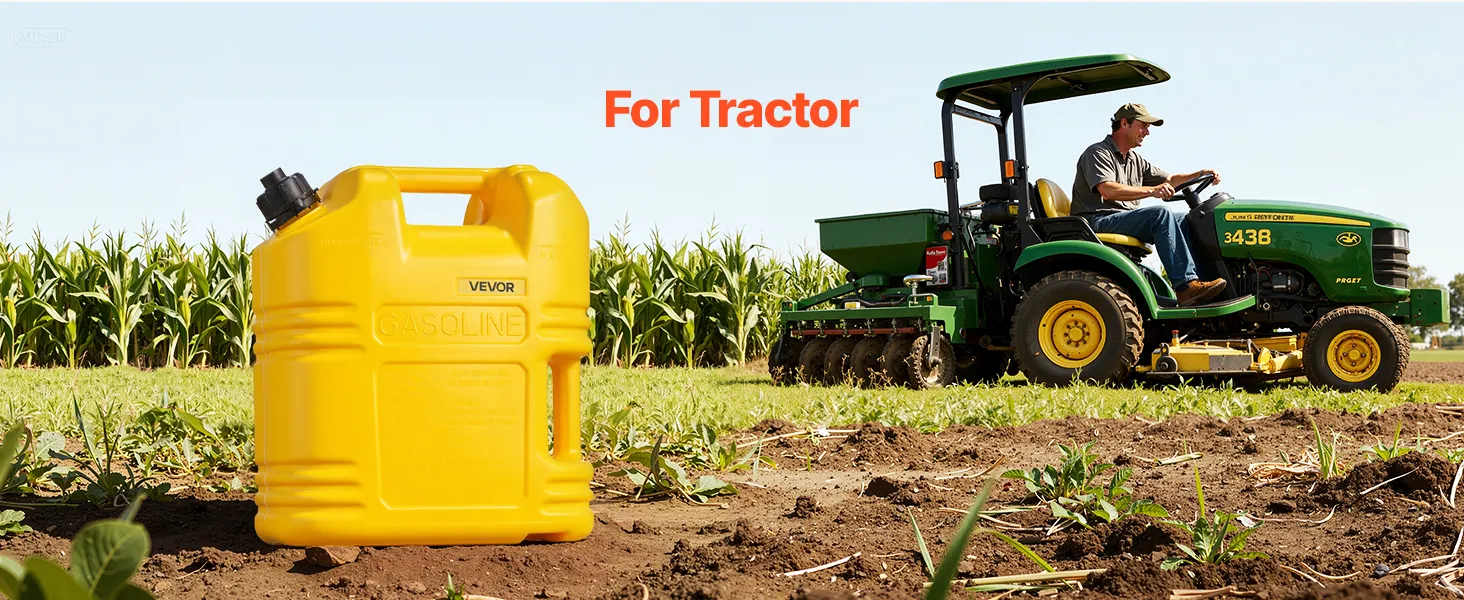
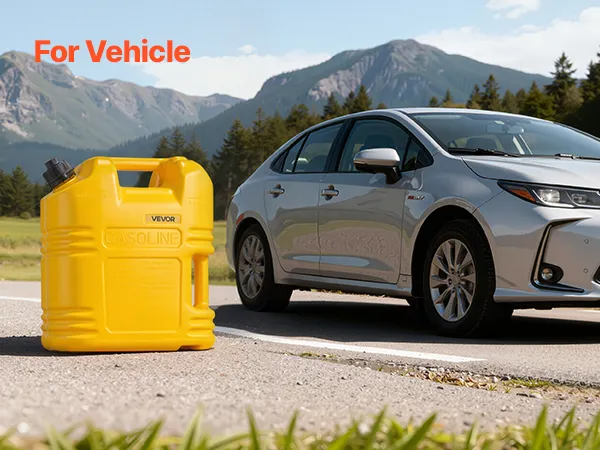
This container holds 19 liters of fuel, enough to give your vehicle an extra 25 to 50 miles of range, depending on the engine size and load. It is a useful reserve that fills the gap between being stuck in the middle of nowhere and the nearest gas station. For camping trips, farming operations, and overlanding trips where gas stations are hours away, the 5-gallon capacity is the bare minimum backup supply for four-wheel vehicles.
15 L/min Flow Rate Through 20mm Hose and Dual Vent Valve Eliminates Air-Lock
This 5-gallon fuel container can empty at a rate of 15 liters per minute through a 20 mm-diameter pour hose, with a dual-vent valve system that equalizes pressure with the atmosphere throughout the entire pour cycle. The dual-vent design keeps the air intake and fuel outlet paths separate, so both can operate simultaneously without competing for the same opening. It stops the pressure differential buildup that makes single-vent containers gurgle, stall, and deliver inconsistent flow during refueling.
The full 19-liter capacity comes out in approximately 76 seconds at a rate of 15 liters per minute through a 20mm bore hose. It is much faster than the 3 to 5-minute pour times typical for standard single-vent 5-gallon containers. This fast transfer rate reduces the time operators spend refueling when managing several vehicles, generators, or pieces of outdoor power equipment in a row at remote worksites.
2mm HDPE Body with PP Extension Spout Resists Impact, UV & Fuel Degradation
This fuel container is made from high-density polyethylene and has a consistent 2mm wall thickness throughout the body panels, base, and shoulder sections. It can withstand the impact of drops, compressive loads, and vibration encountered when moved across unpaved roads, construction sites, and off-road trail systems. The 2mm wall specification spreads impact energy evenly across the entire panel surface, rather than concentrating it at specific contact points.
The polypropylene extension spout maintains its shape and the exact shape of the cap seat, even after years of exposure to fuel, UV light, and temperature changes between cold winter storage and hot summer vehicle compartments. PP is naturally resistant to gasoline, diesel, and ethanol-blend fuels, helping prevent the spout from swelling, warping, or developing microcracks that can make the seal less effective over time.
Anti-Loosening Sealing Ring Maintains Zero-Leak Closure Across Rough Terrain
The cap assembly features a compression-fit sealing ring and an anti-loosening locking mechanism that maintains steady closure force even when the vehicle is vibrating, accelerating laterally, or hitting obstacles while driving off-road. Without anti-loosening retention, threaded fuel caps slowly come loose when exposed to constant vibration frequencies.
The anti-loosening design keeps the sealing ring under constant pressure during long trips on rough roads, gravel tracks, and trail systems where vibration is always present and cannot be avoided. This zero-leak closure performance is very important for SUV cargo areas and UTV open beds, where fuel spills can get onto the vehicle's carpeting, electrical wiring, and other nearby equipment.
5 Gallon Fuel Container Yellow HDPE Construction Provides Instant Visual ID Across Multi-Fluid Storage
This fuel container has a standard yellow exterior that follows the internationally recognized color-coding system for storing diesel fuel. This feature makes it easy to tell it apart from red gasoline containers, blue water containers, and green oil containers stored in the same vehicle, workshop, or field supply depot. This instant color identification eliminates the significant risk of misfueling that occurs when multiple fluid containers are stored together, and operators grab the wrong one when they are in a hurry or in the dark.
Instead of being applied as a surface coating, yellow HDPE coloring is molded throughout the entire wall thickness. It ensures the identification color remains visible and identifiable even after years of outdoor UV exposure, scratching, and abrasion. Color-coded containers help fleet operators, farm managers, and construction site supervisors keep track of multiple types of fluids across multiple vehicles simultaneously.
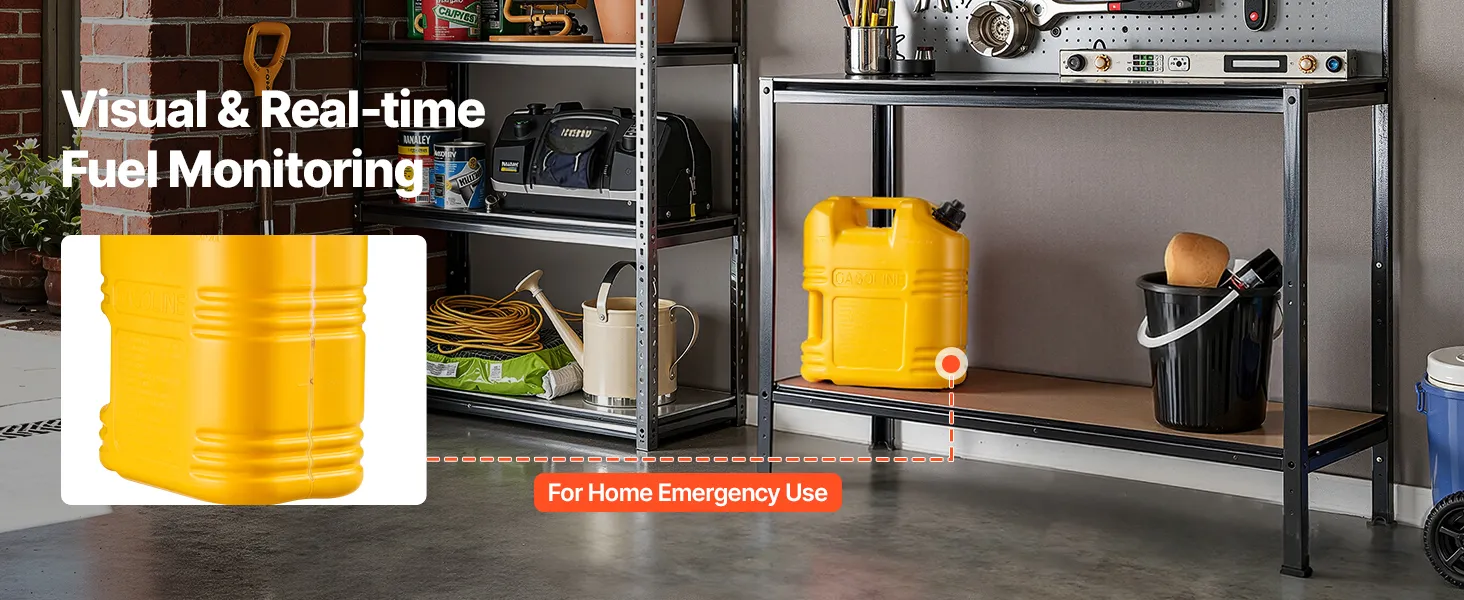
Raised Scale Markings on 19L Body Enable Accurate Volume Checks Without Opening
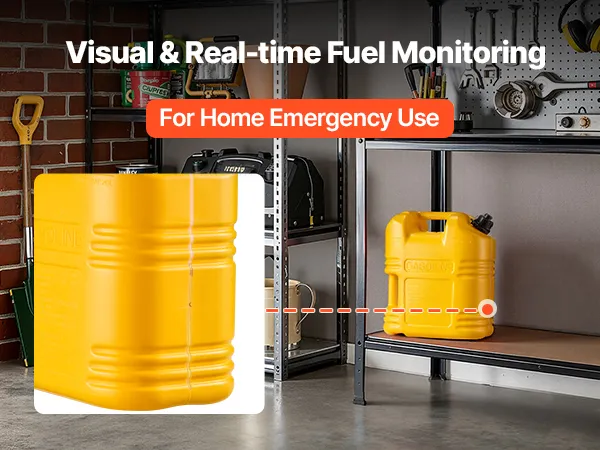
The outside of this 5 gallon fuel container has permanently molded raised scale markings that show how much fuel is left in precise liter increments. It lets operators check the fuel level by looking at the container without removing the cap, using a measuring device, or guessing based on the container's weight. Raised molded markings remain legible much longer than printed adhesive labels, which dissolve, peel, and fade after contact with fuel, exposure to the elements, and cleaning.
With precise volume visibility, you won't make mistakes that cause fuel spills when moving vehicles or mistakes that leave you with too little emergency reserve for planned trip distances. For field operations that need to manage fuel rationing across several generators, vehicles, or pieces of equipment simultaneously, the clear scale markings on each container make it easy to check inventory from a standing position quickly.
Flat 13.4 x 9.1 x 15.2 in Profile Fits Cars, SUVs, Motorcycles, ATVs & UTVs
The external dimensions of this fuel container are approximately 13.4 x 9.1 x 15.2 inches, making it suitable for storage in five types of vehicles: passenger cars, SUVs, motorcycles, ATVs, and UTVs. The 9.1-inch flat depth allows SUVs and touring motorcycles to store it in their shallow under-floor storage compartments and narrow saddlebag clearances, since they don't accept deeper standard jerry can profiles.
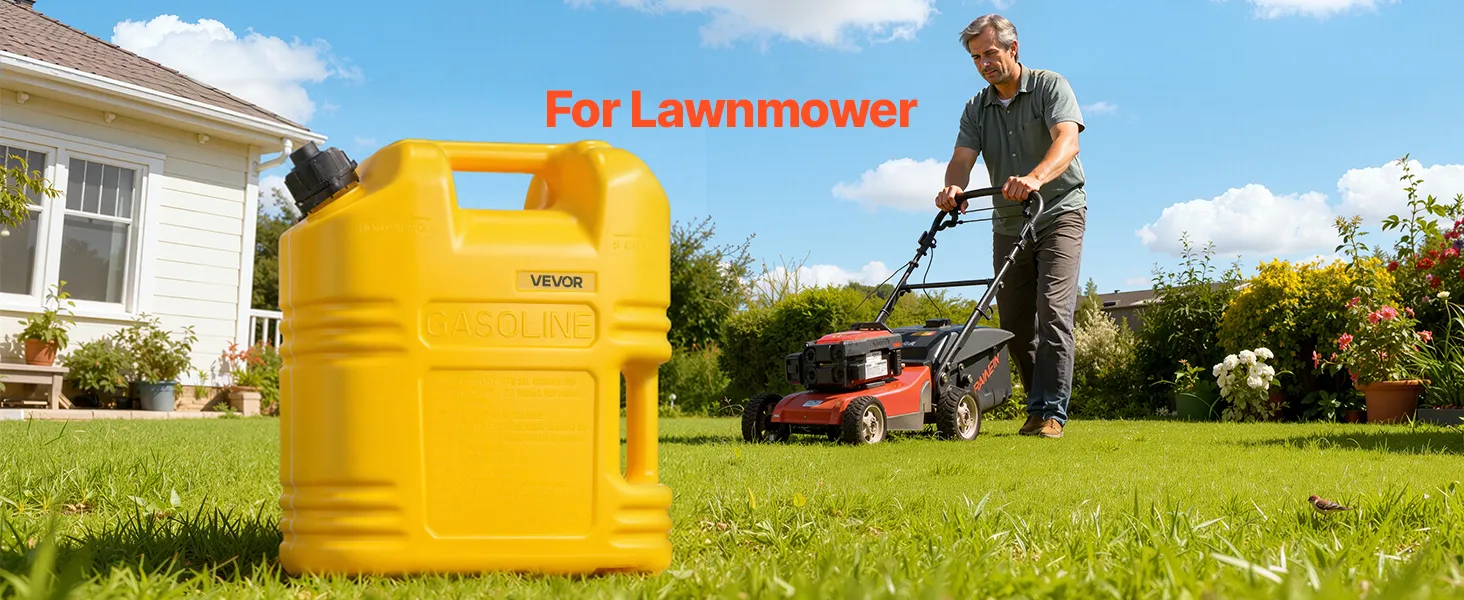
The VEVOR 5 gallon fuel container works with five different vehicles, making it a convenient option for families with multiple vehicles and outdoor recreation groups that use mixed fleets from shared base camps or truck beds. It reduces the total number of pieces of equipment, makes storage easier, and provides each vehicle in the fleet with a consistent 19-liter backup fuel capacity from a single standardized portable container.