The user thought the product was very good and gave it a 5-star review.
SKU: FDSWQZDQFDSDN0VTX001V0


Top highlights
- 36-inch bending capacity with 0°-135° angles for medium to large projects
- Supports multiple materials including 16-gauge mild steel, stainless steel, copper, and aluminum
- Customizable bending with six segment fingers for complex designs
AI Summarized from product information
Specifications
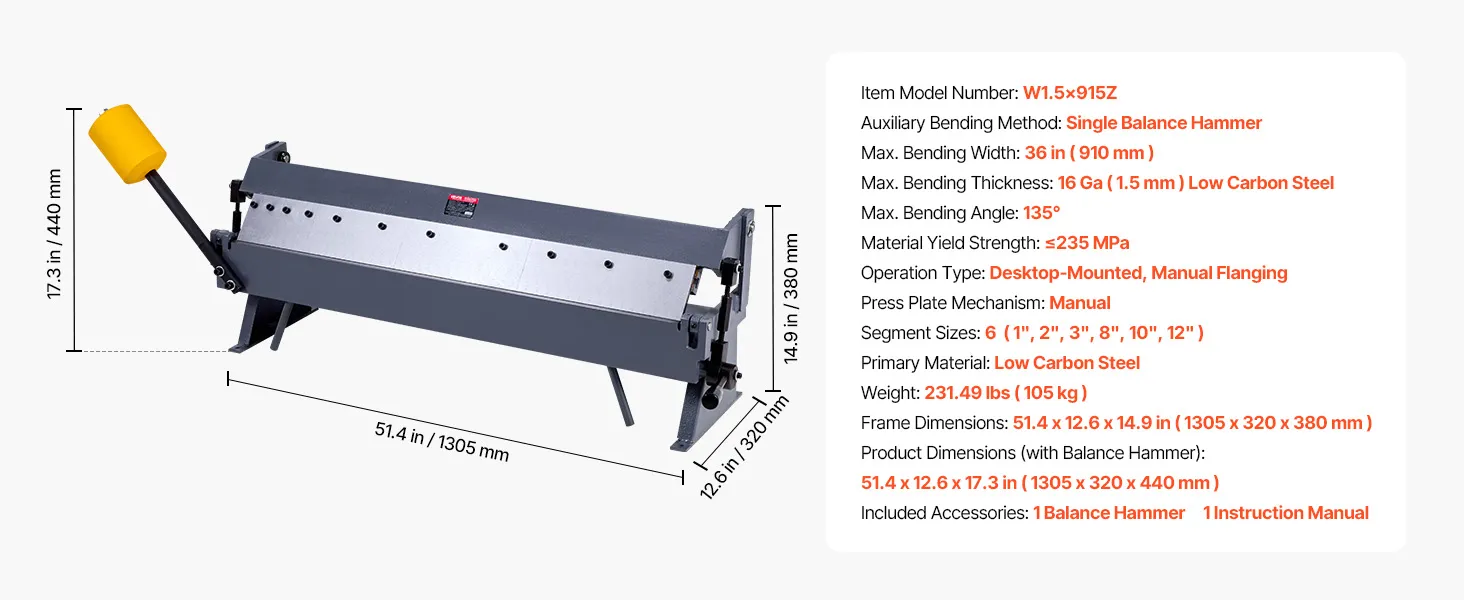
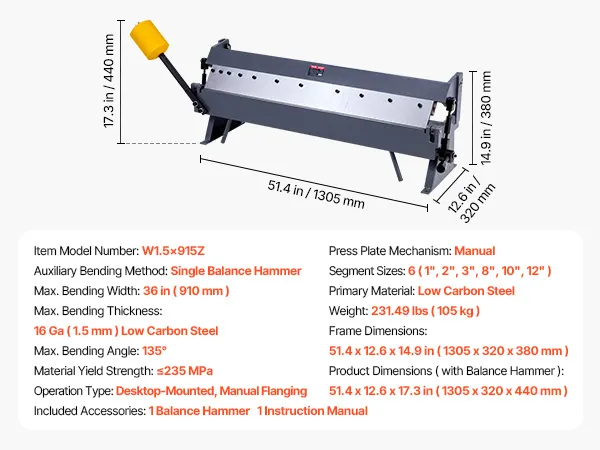
- Item Model Number W1.5×915Z
- Auxiliary Bending Method Single Balance Hammer
- Max. Bending Width 36 in (910 mm)
- Max. Bending Thickness 16 Ga (1.5 mm) Low Carbon Steel
- Max. Bending Angle 135°
- Material Yield Strength ≤235 MPa
Reviews · 4.1
Reviews · 4.1
 neil060863
in
 on Sep 16,2026
910 mm/36 inch Single Balance Hammer
 Brett
in
on Sep 04,2026
on Sep 04,2026
610 mm/24 inch Single Balance Hammer
This pan brake is exactly as described in the advertising detail, its construction is robust with removable fingers that provide a fine line to bend with extreme accuracy once the setup is completed as per the basic instructions. The maximum width is promoted at 610mm (+/-10), I found that I was able to fold a full 625mm sheet of 2mm aluminium 5051 to 135 degrees without too much effort at all. Although not rated, this machine handles smaller width folds of 3mm 5051 alloy at a pinch. The written details suggested an adjustable angle stop was available for repetitive folding, however it appears that it is not included with this model, so I simply made a custom mod to suit. Regional (included) delivery was faster than a small express post parcel from ebay, which is quite amazing considering the hefty weight and bulky size, all packaged neatly in a protective timber enclosure. I don't often give 5 stars for machinery, but this product from Vevor deserves every point. Thanks Vevor, it has restored my faith in DIY priced Chinese workshop products and unbeatable delivery & service. 10/10
About this item
Description
Sheet Metal Brake for Rapid Batch Bending
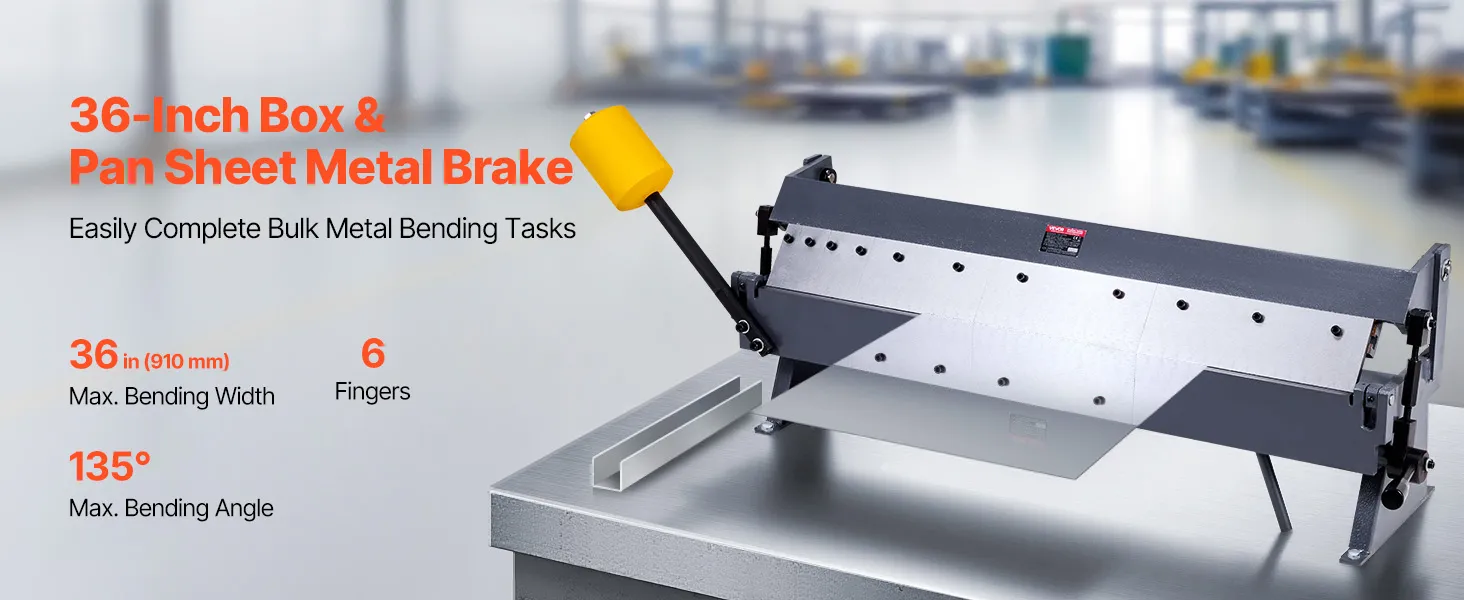
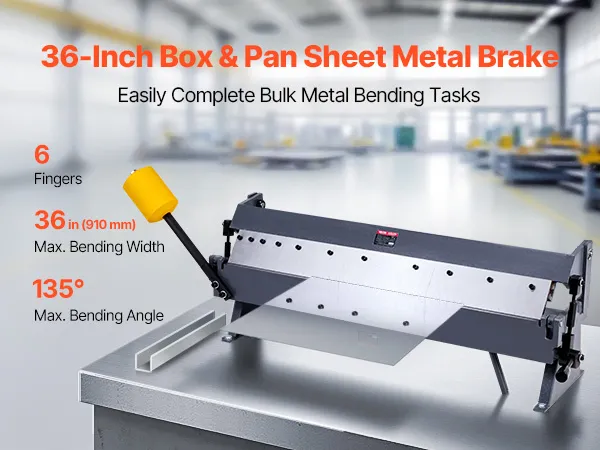
Bend metal like a pro with this 36-inch sheet metal brake. Ideal for workshops, the box and pan brake handles 16 gauge steel, supports multiple materials, and features modular fingers for complex bends—easy to use, stable, and built for precision bending.
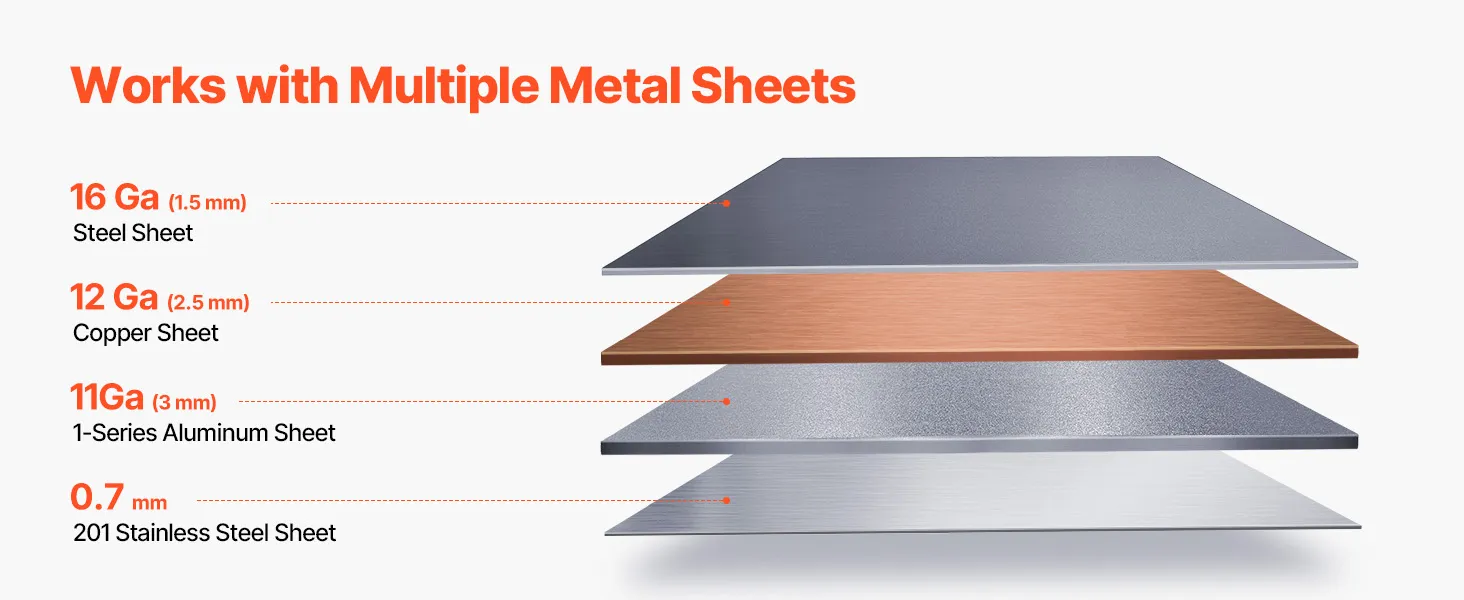
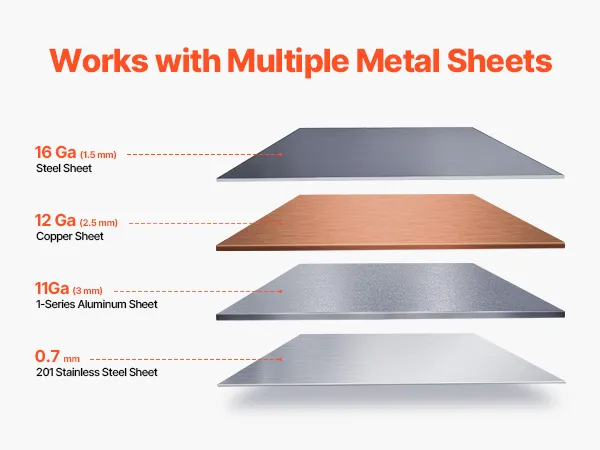
The box and pan brake handles mild steel, stainless steel, aluminum, and copper with ease. Bends 16-gauge (1.5 mm) mild steel in a single pass—no need to swap between machines for different jobs.
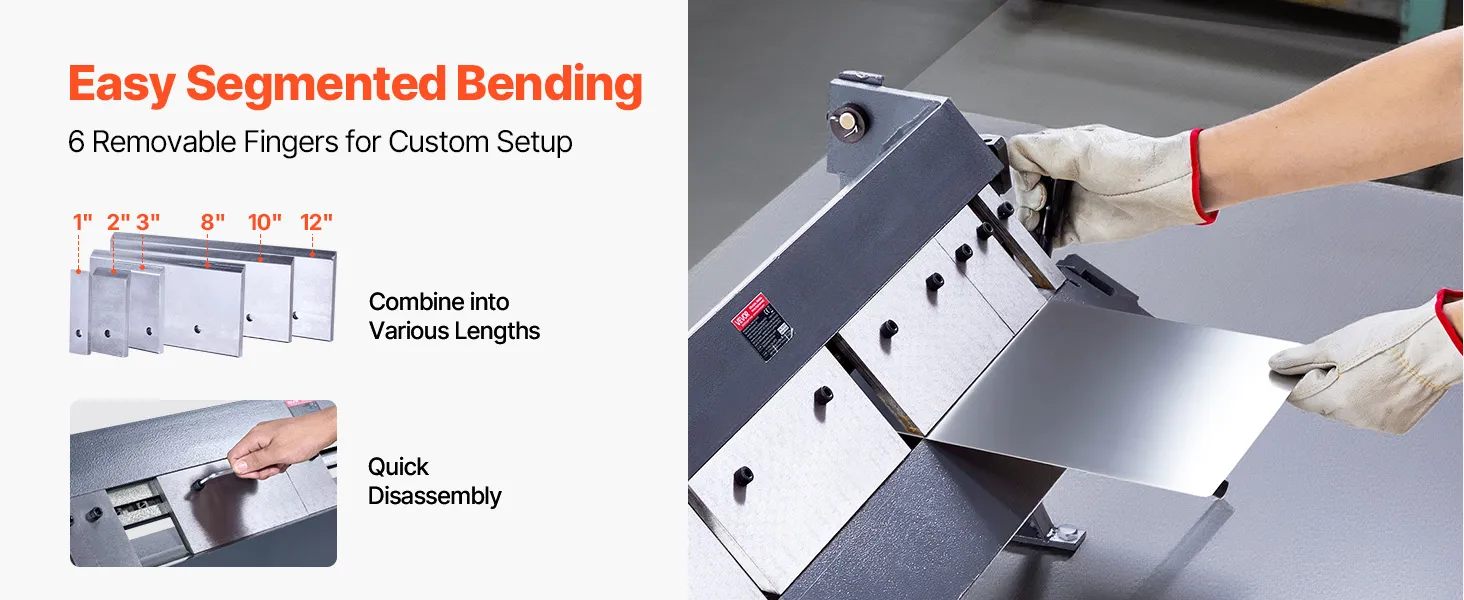
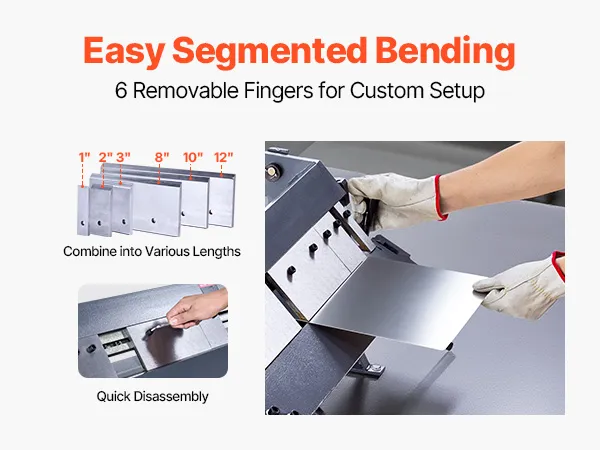
The sheet metal bender includes 6 removable fingers in multiple sizes that can be freely arranged to avoid obstructions on the workpiece. Ideal for forming floor reinforcement channels, corrugated truck beds, bed headers, and inner fenders.
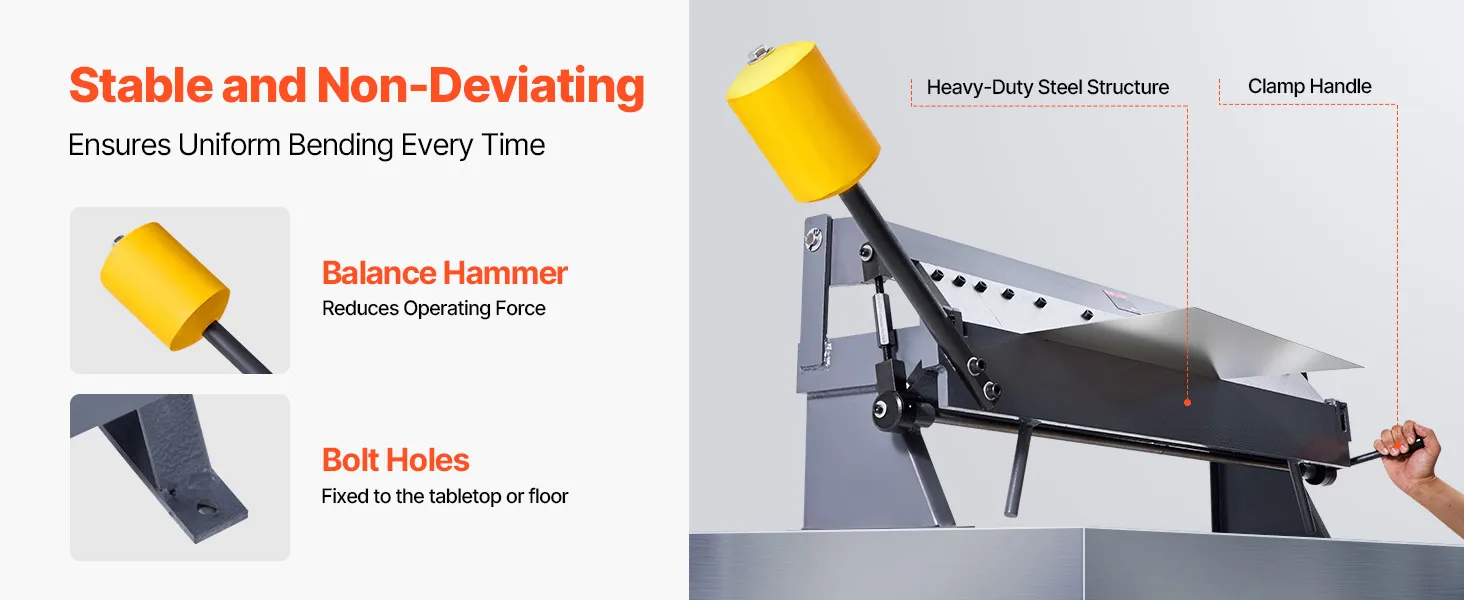
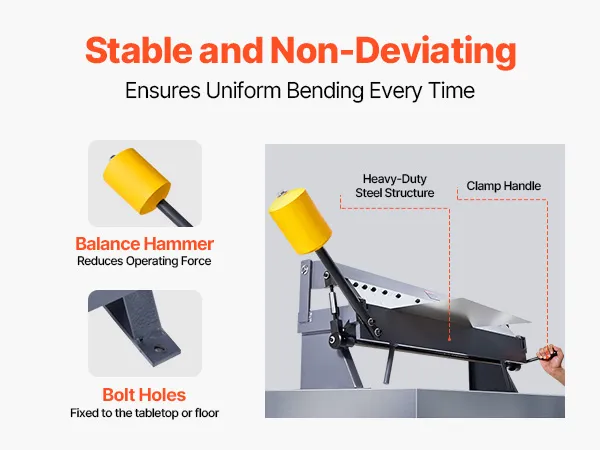
Enhanced with a balancing weight to offset the force during clamping, minimizing deformation—an upgrade over standard brakes. Bolt it down to your workbench to ensure steady, accurate bends.
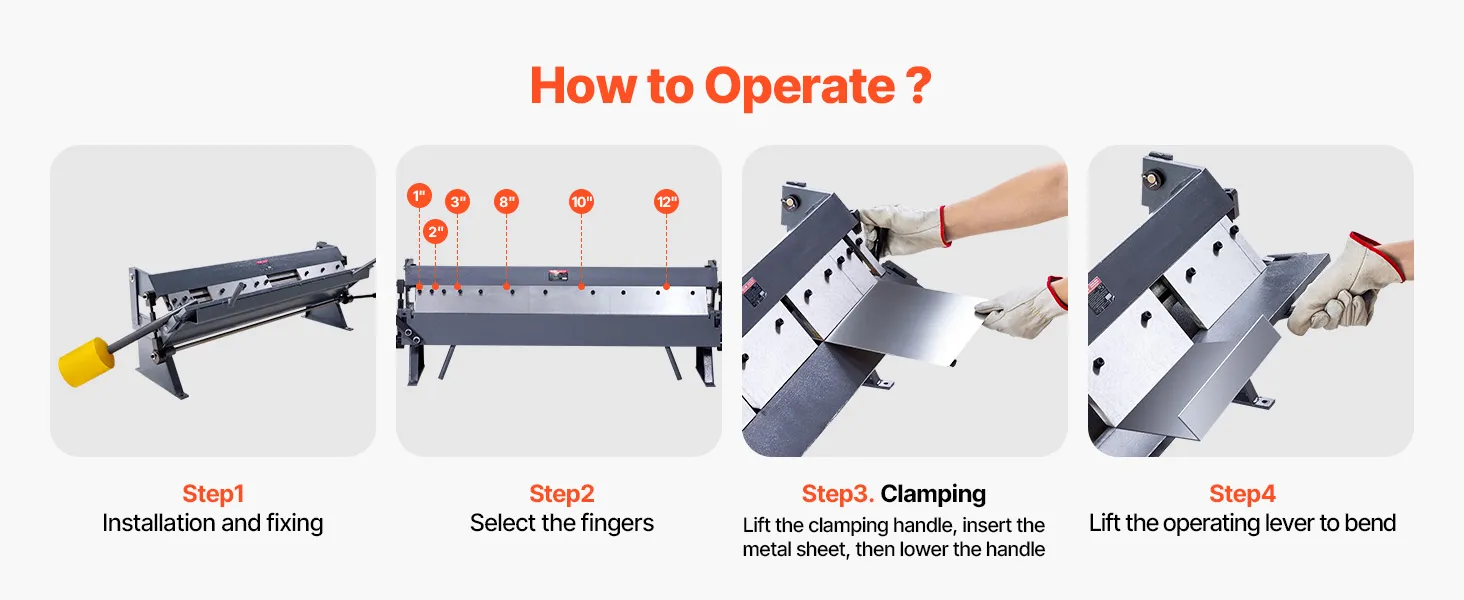
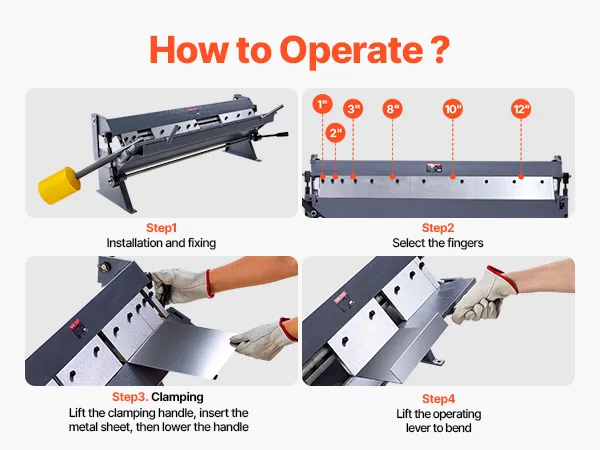
Always wear goggles, non-slip gloves, and safety shoes before operating the metal bending brake. Stand to the side during bending to avoid injury from springback. For larger sheets, team up with a partner for secure handling.
VEVOR Box and Pan Brake Bends 36 Inch Wide Sheet Metal from 0 to 135 Degrees with Precision
The VEVOR box and pan brake can handle sheet metal up to 36 inches wide, putting it firmly in the medium to large capacity range for bending jobs in workshops and light industry. This working width fits most standard sheet metal panel sizes used in HVAC fabrication, electrical enclosure manufacturing, and custom metalwork. It lets operators make full-width bends in a single pass without moving the machine or setting it up multiple times.
The bending range can be adjusted from 0 to 135 degrees, which gives you the freedom to make everything from shallow decorative folds to steep structural flanges and almost-closed hems with the same machine setup. This range of heavy-duty aluminum folders eliminates the need for multiple specialized bending tools and combines all the different bend angles into one folder.
16 Gauge Mild Steel Capacity Handles Mild Steel, Stainless Steel, Copper, and Aluminum Sheet
This box and pan brake can handle 16 gauge mild steel, 1.5 mm thick. It provides the clamping and bending force you need to work with one of the most common sheet metal gauges that requires a lot of resistance in the workshop. The 16 gauge rating isn't just for mild steel; the machine can also work with stainless steel, copper, and aluminum sheet, which are the four main metals used in professional fabrication settings.
Different materials have different springback and yield strength profiles, which affect how to calibrate the bend angle. The manual angle adjustment system accounts for these material-specific factors, allowing the operator to set compensation angles for each material type. This smart, material aware approach to setting angles ensures accurate results, regardless of the compatible metal being worked on.
6 Modular Segment Fingers in 1", 2", 3", 8", 10", and 12" Widths Enable Complex Box Forming
The six interchangeable segment fingers, available in sizes 1, 2, 3, 8, 10, and 12 inches, make this machine more than just a regular sheet metal brake. It can also form three-dimensional boxes and pans. By choosing and placing certain finger combinations along the clamping beam, operators can make bending dies that fit the exact internal dimensions of the box or pan profile they are making.
With this modular system, you can build complex components such as electrical enclosures, instrument housings, and ventilation duct sections on a single machine without ordering custom tools or hiring outside fabrication services. The 1” finger is especially useful for bending narrow flanges and small box sides where a wide, continuous die would contact walls that had already been formed and prevent the bend from finishing.
Single Balancing Hammer Clamping System Reduces Operator Force and Improves Bend Consistency
The single balancing hammer mechanism evenly distributes clamping pressure across the full width of the sheet metal workpiece, so the operator doesn't have to push down hard on the clamping handle. The balanced hammer geometry evenly distributes the clamping load across the entire 36” working width, reducing operator fatigue during long bending sessions and ensuring a consistent grip.
The bend quality is directly related to the pressure applied to the clamp. If the clamp is uneven, the sheet can move or bow during the bending stroke, resulting in uneven angles and leaving surface marks that need to be corrected or discarded. The balanced hammer design eliminates this variability by maintaining a consistent grip force at every point along the die.
Box and Pan Brake Pre Drilled Mounting Holes at the Base Allow Secure Workbench or Floor Installation
The base of the machine has pre-drilled holes for mounting that work with standard fasteners. It lets you install it permanently or semi-permanently on a workbench or directly on the workshop floor. When the brake is anchored during operation, the machine doesn't move or vibrate when heavy sheet metal is lifted against the bending lever.
Mounting it on the floor or bench also frees up both of the operator's hands to control the workpiece and the bending lever, so they don't have to use one hand to keep the machine from moving. For fabricators who need to make multiple bends on each part or work with large, heavy sheet panels that need full control of both hands, a properly anchored installation is not just nice to have.
Aluminum Folder Construction Combines Lightweight Rigidity with Long-Term Corrosion Resistance
Aluminum is used to make the bending beam and folder parts. It gives the machine a good balance of structural rigidity and weight, making it easy to move around the shop while still keeping the dimensions stable enough for accurate repeat bending. Because aluminum does not rust like carbon steel, the bending surfaces and clamping parts remain free of rust and surface pitting, which can make bending less accurate and degrade the workpiece's surface quality over time with uncoated steel tools.
In workshops where coolants, cutting oils, or high humidity are present, aluminum tools don't need to be refinished as often as steel tools do to stay in good condition. This means that they are less likely to rust. The box and pan brake stays accurate in size and smooth on the surface, even after years of regular use in the shop.
3 Step Operating Sequence with Manual Springback Compensation Delivers Accurate Angle Results
There are three basic steps in the operating sequence: lift the clamping handle, move the sheet metal into place, lower the handle to hold it, and then raise the bending lever to the target angle. This streamlined workflow simplifies the process between setups. It lets experienced operators quickly process multiple bends and lets less experienced users learn the proper technique quickly.
Instead of using mechanical stops, the operating method includes manual springback compensation. It allows the operator to directly control the final bend angle for each material type and gauge. The box and pan brake documentation provides clear instructions for compensating for springback, such as setting the machine to 92 degrees to achieve a finished bend of 90 degrees.
Product guides and documents
Frequently Bought Together
VEVOR Box and Pan Brake, 910 mm Sheet Metal Bending Brake,16-Gauge Mild Steel Capacity, 0-135 Degree Adjustable, Metal Bender Machine with 6 Fingers, Heavy-Duty Aluminum Folder for Precise Bending
4.1 29
2773 90 zł
Get -% off for new user
Each when you buy 0+.
Shop
5,00zł off 1st App Order 99,00zł+